- Home
- Planning A Garden
- Making a Vegetable Garden
Making a Vegetable Garden in Your Backyard, or on Your Patio

Here are tips for making a vegetable garden in 9 easy steps!
Grow your own fresh organic vegetables at home using this simple plan.
Even for the beginner, making a garden is easy.
Small and simple is a great way to begin your first vegetable garden.
Choose 6 or 7 of your favorite vegetables to get started when planning a vegetable garden.
Make a vegetable garden plan.
Design Your Own Vegetable Garden Layout Using our Free "Vegetable Garden Planner" Software!
Purchase seeds or small plants from your local garden center.
Keep it simple.
Involve your family!
If you don't have access to a plot of ground, consider making a container, vertical or hanging vegetable garden.

If tilling up the soil seems like too much work, consider creating a raised bed, square-foot garden, or container garden in a sunny location.
See our complete guides for raised bed gardening, for square foot vegetable gardening, and last but not least, container vegetable gardening!

Creating a Raised Bed Garden

A raised bed is one of the easiest ways to start making a vegetable garden, especially if your native soil is heavy clay, full of rocks, or simply not in great shape.
Building a frame and filling it with a good growing mix gives you complete control over soil quality from day one, dramatically improves drainage, and means far less bending and kneeling than gardening directly in the ground.
Raised beds also warm up faster in spring, letting you plant a little earlier than you could in open soil.
A simple 4 by 8 foot frame, built from untreated lumber and filled with a blend of topsoil and compost, is enough to grow a genuinely impressive amount of food.
Once it's built and filled, a raised bed tends to stay productive for years with just an annual top-up of compost — one of the best long-term investments you can make in a new garden.
Container Gardens for Smaller Spaces and Ease of Planting and Care

Container gardens are a wonderful option when making a vegetable garden on a patio, balcony, or any spot without open ground to dig into.
Almost anything can grow in a pot as long as the container is large enough — a five-gallon container works well for compact crops like lettuce and herbs, while tomatoes and peppers do best in something closer to ten gallons.
Good drainage holes are essential, since vegetables left sitting in waterlogged soil quickly develop root problems.
The trade-off for the flexibility containers offer is more frequent watering, often daily in hot summer weather, since potting soil dries out far faster than garden soil. Be sure to locate your container vegetable garden near a convenient source of water.
The reward is a vegetable garden you can place exactly where it gets the best sun, and move around as the seasons change.
9 Steps for Creating a Backyard In-ground Vegetable Garden:
Planning Stage
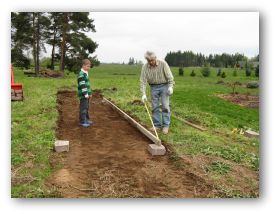
- 1. Start by choosing a level area of your yard that gets the most sunshine.
(Make certain that there are no trees or shrubs in the immediate area as their roots will rob your garden of water and nutrients.)
- 2. It is always a good idea to mark off your garden area with wooden stakes and string.
Start Digging!
- 3. Remove any existing grass with a shovel or spade.
Hint: You may also choose to erect a small fence around the area to keep animals and neighborhood pets out of your garden.
If this will be a permanent garden site, consider planting a border of blueberries or raspberries on the edge of your garden to create a delicious border.
- 4. The next step when making a vegetable garden is to dig the soil with a spade and loosen up all the clumps. Or if available, you can use a garden rototiller. Working the soil will allow air and water to circulate more freely in the soil.
Helpful Hints: It is essential that you add at least two inches of compost and well-aged manure to your soil at this point, and work it in.
Compost gives soil even more air and allows water to easily penetrate right down to the roots.
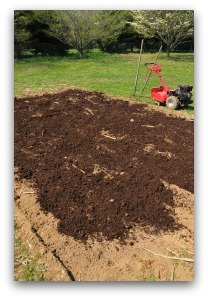 Use Compost When Starting a Vegetable Garden
It is also a good idea to check the PH of your soil.
You can find the correct instruments for measuring PH in any home and garden store.
If you discover that the PH in your soil is not idea for making a vegetable garden, do not fret.
This is a fairly common problem and can be corrected with a small amount of lime of gypsum.
You will need to reapply these ingredients about once every year to maintain optimal PH levels.

Layout
- 5. Layout your garden rows from north to south when making a vegetable garden, to prevent shading your plants. Also, plant tallest vegetables on the north end of your garden, medium height plants in the center, and shortest plants on the south end of your garden.
- 6. Use small stakes and string to mark your garden rows for planting.
Hint: If your garden plot is more than 4 feet wide, be sure to leave 2-3 foot paths between your rows so that you will be able to tend and harvest your garden without trampling your plants!
 Watering Your Garden
Plant and Water!
- 7. Follow the planting and spacing instructions on each of the seed packets or small plants that you have chosen.
- 8. Water your newly planted garden frequently, as the seeds need to be damp in order to sprout. Small vegetable transplants do not have well-established root systems, so take care that they do not completely dry during the first few weeks.
- 9. Take care to remove all weeds promptly from your garden, as they will try to "take over" if you let them get started.
Great Reasons for Making a Vegetable Garden

Making a vegetable garden can a fun and rewarding experience for the entire family.
To begin with, it will teach your kids exactly where fresh produce comes from.
It will also let them know the difference between fresh food and fast food, which can be an important life lesson and may inspire them to eat better healthier foods in the future.
Because as we all know, fresh food simply tastes better.
And once a child has helped plant and grow fresh vegetables, they will likely never pout or refuse to finish their veggies again!
Spend some "quality time" together enjoying mother nature at her finest.
Return to our Planning a Vegetable Garden hub for complete guides to garden design, layout, raised beds, containers, and planning tools.
- Planning a Vegetable Garden — complete hub for garden design, layout, raised beds, containers, and planning tools

Recent Articles


-
Raised Bed Vegetable Garden: Plans, Layouts, and How to Build One
Sep 27, 26 09:37 PM
 A raised bed vegetable garden step by step: where to put it, size and depth, materials, how to build and fill it, a free 4x8 planting plan, and what to grow.
 -
Container Vegetable Gardening: Ideas, Designs, and Growing Tips
Sep 27, 26 05:56 PM
 Container vegetable gardening made easy: best pots and soil, what to grow, pot sizes, watering and feeding, plus container garden designs, ideas, and pictures.
 -
Fall Vegetable Garden Guide: The Complete Guide to Autumn Growing
Sep 26, 26 11:28 AM
 This fall vegetable garden guide covers the best crops, timing, frost protection, and planting charts for a productive autumn harvest.
 -
Garden Story for Children: Free Printable; Ben's Garden Year
Sep 25, 26 12:50 PM
 A free printable garden story for children ages 4-7. Read it online or print the picture book: Ben plants seeds in winter, grows a tomato, and picks radishes.
 -
Basic Vegetable Garden Design: Layouts, Plans, and Ideas for Any Yard
Sep 24, 26 08:10 PM
 Basic vegetable garden design made simple: pick a layout, raised beds or in-ground, paths and water, the four-square rotation, and free plans and a planner.
 -
Child Vegetable Garden--Kids Gardening Hub
Sep 23, 26 08:04 PM
 Everything for kids in the garden; free worksheets, coloring books, preschool activities, scarecrow projects, and tips for planning a child vegetable garden.
 -
Growing Cucumbers — Complete Guide to Planting, Care, and Harvest
Sep 23, 26 01:59 PM
 Complete guide to growing cucumbers: varieties, planting times, soil, spacing, trellising, watering, pests, and harvesting for a big cucumber crop.


