- Home
- How to Grow Vegetables
- Growing Okra
Easy Tips for Growing Okra
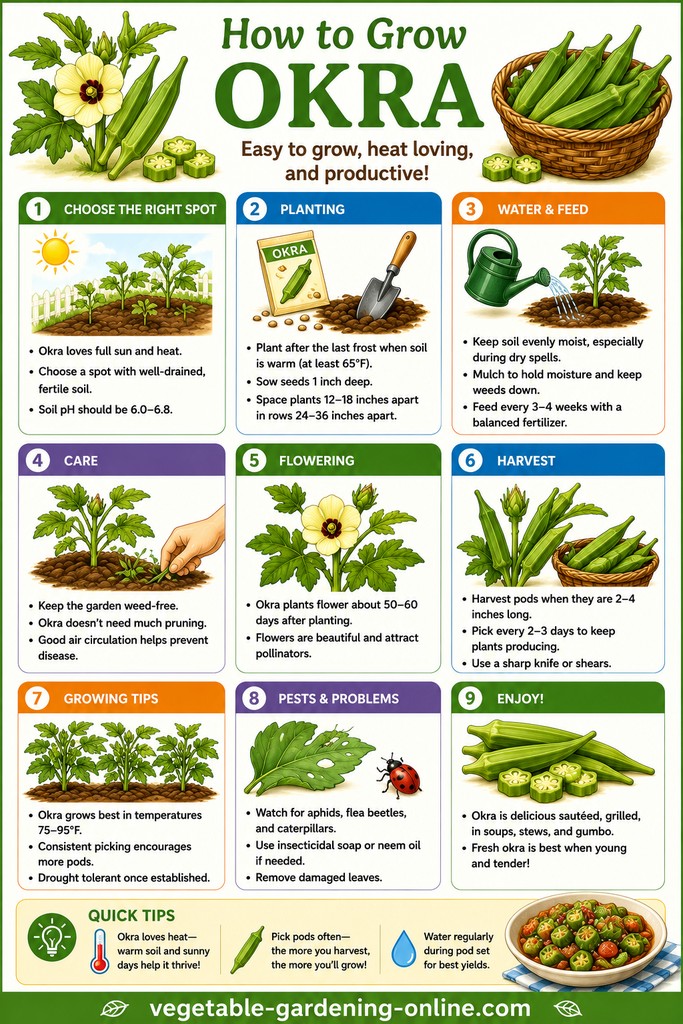
Easy methods for growing okra when home vegetable gardening.
Learn how to plant, care for, and harvest okra plants in your backyard vegetable garden.
Create Your Own Free Square Foot Garden Or Planting Guide
In the southern states, okra is as familiar garden vegetable but it is rarely found planted in colder parts of the country.
That is unfortunate for the folks living outside of the south to miss out on such a taste sensation.
Every gardener should try their hand at growing okra at least once!
The plant is a type of hibiscus and a member of the hollyhock and marsh mallow family.
The edible portion is the long, pointed immature seed pod.
A 15 foot row of plants in flower and the edible portion or pod, makes an attractive hedge that grows from 3 to 5 feet tall.
If you are searching how to grow okra and do not have space for the planting dimensions mentioned above, you can cultivate several plants as a background among annual flowering plants.
This vegetable gardening technique will supply enough okra to add to delicious soups and stews along with tomatoes and peppers.
Okra is a decorative growing plant which is not so surprising since it is a type of hibiscus.
A 15 foot row of plants in flower and the edible portion or pod, makes an attractive hedge that grows from 3 to 5 feet tall.
Growing Okra from Seeds
In mid-April, start okra seeds in peat pots, planting 2 seeds to a pot.
The surface of these seeds is a little tough, which makes them reluctant to germinate.
Download Free Garden Planning Worksheets, Garden Diary, Zone Chart, Or Planting Guide
Rub each seed across a file or a piece of sandpaper before planting to wear away some of the seed's surface, allowing for easier sprouting to occur.
After they begin to grow, snip off the weaker seedling in each pot.
Leave the remaining okra to grow stronger.
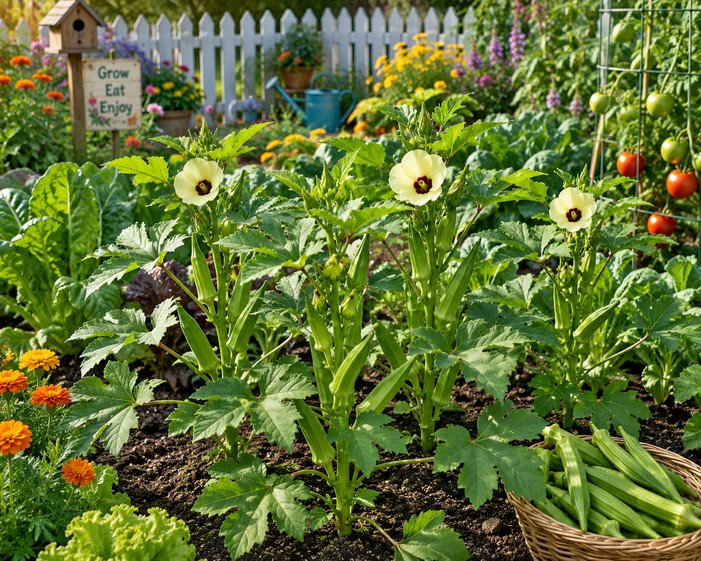 Okra plants are a beautiful addition to a home vegetable garden. They are a member of the hibiscus and hollyhock family.
Okra Seed Sprouting Tip
If you have difficult time getting okra to sprout, here is a vegetable gardening tip: first freeze the seeds in ice cubes and then plant the cubes.
The ice cube method has raised the minimum germination standards from 50 percent to as high as 80 percent for gardeners trying this method.
- Drop a seed into each compartment of the tray.
- Fill the tray half-full with hot water.
- Freeze for a couple of days.
- Then plant the ice cubes.
(You can plant at night using a flashlight if you don't want the neighbors to see you planting ice cubes!)
How to Grow Okra in Northern or Cooler Climates
- The okra seedlings begun in peat pots in April are ready for the open vegetable garden in June as warmer weather arrives.
- After thinning to 1 plant per pot, set the plants out at 18 inch intervals.
- Feed with a foliar fertilizer and water mix.
- The okra harvest will begin in July and last until frost.
- In Northern gardens, okra grown from seed planted in April reaches a
height of 3 to 4 feet by July when the first harvest begins.
- The youngest vegetables are by far the best tasting.
- Okra pods are at their peak when they are only half grown or no more than 2 inches or so long.
How to Grow Okra in Southern or Warmer Climates

- Okra is a warm season crop.
- Seeds will germinate in 1 to 2 weeks.
- To hasten the process, soak overnight in water.
- Sow seeds directly in the garden after last frost when the soil has warmed to 60 degrees.
- For intensive spacing, plant 12 to 18 inches apart.
- Dwarf varieties are suited to even closer spacing.
Okra Requirements
- The plants prefer soils that are rich, well-drained, and supplied with lots of organic matter.
- The pH can range anywhere from 6.0 to 8.0.
- Okra requires full sun.
- This heavy feeder needs large amounts of nitrogen.
Vegetable Gardening Tips for Growing Okra
- Okra shares gardening space well with Swiss chard and cucumbers.
- When okra follows a legume crop it benefits from the accumulated soil nitrogen.
Tip for Reviving Scraggly Okra Plants
Harvesting Okra
Begin harvesting your okra in July.
Harvest everyday or two to prevent the pods from growing large and woody.
If the harvest is not kept up, the plants will stop producing.
Best Okra Varieties
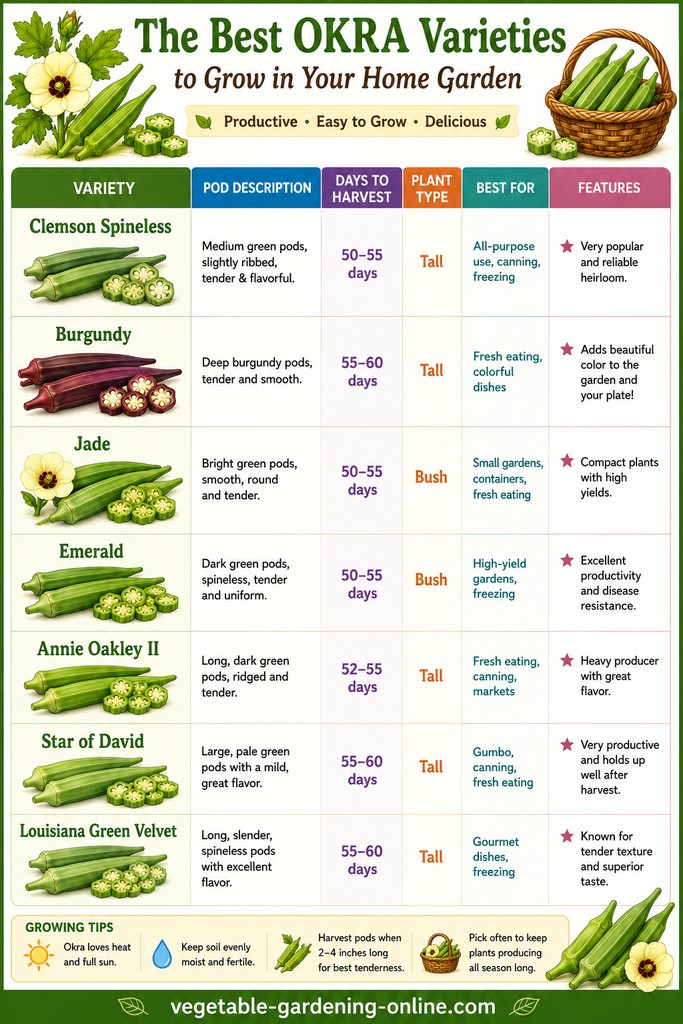
Clemson Spineless is ready to be harvested in 55 days.
Okra is most delicious when pods are only 2 to 2 ½ inches long.
The vegetable is a tasty treat any way you slice it!
Prepared battered and fried, simply boiled and buttered, or baked along with meat and other vegetables in soups or stews.
The heavy yielding plants grow to 4 foot tall with pods 6-7 inches long.
Another recommended variety is Emerald.
For a space-conserving plant, Dwarf Long Green Pod grows only 2-3 foot tall.
A person does not have to be born in the South to enjoy eating okra.
Once you get a taste of this delicious vegetable, you will never want to plant your garden without okra. In fact, "gumbo" in those mouth-watering Creole dishes is none other than okra.
- Growing Vegetables — complete hub for growing all vegetables at home

Recent Articles


-
How to Grow Green Beans
Sep 15, 26 10:55 PM
 How to Grow Green Beans: The Complete Guide to Bush and Pole Beans. Green beans are one of the most forgiving crops a beginner can choose.
 -
How to Grow Cabbage
Sep 15, 26 12:33 PM
 How to Grow Cabbage: The Complete Guide from Seed to Harvest. This complete guide covers everything you need to know about how to grow cabbage.
 -
Easiest Vegetables to Grow: 15 Foolproof Crops for Beginners
Sep 15, 26 09:24 AM
 Easiest vegetables to grow for beginners - with advice on what makes each one easy, how to get started, and which vegetables are harder than they look.
 -
Seasonal Vegetable Garden
Sep 14, 26 05:38 PM
 Seasonal Vegetable Garden — Growing Food Through Every Season
 -
Overwintering Vegetables: Fall-Planted Crops for Early Spring Harvest
Sep 14, 26 05:35 PM
 Learn about overwintering vegetables like garlic, fava beans, and onions, planted in fall to sit through winter and reward you with an early spring harvest.
 -
Free Vegetable Garden Journal— Printable Downloads for Home Gardeners
Sep 14, 26 01:51 PM
 Download our free Vegetable Garden Journal — choose a full 16-page version or simpler 7-page journal. Track planting, harvest, & garden notes season by season.
 -
Free Vegetable Garden Cut and Paste Activities for Kids Ages 5-7
Sep 12, 26 09:13 PM
 Free printable vegetable garden cut and paste activities for kids ages 5-7. Build your own garden, match seeds to plants, and learn what grows where.


